Week 42: The Startup of You

I’ve been reading The Startup of You by Reid Hoffman and Ben Casnocha. It’s okay. These guys basically posit that in the fast paced world we live in today, you need to treat your career like a startup. That means being agile, weathering small shocks and sudden changes, weighing risk, and building a network. I really want to like this book, but it just isn’t that useful.

Overall, TSoY seems unfocused. I can’t tell how they decided to order the chapters or what kind of logical progression they follow. Parts of it are about agile entrepreneurship. Little Bets covers the same material but better. Parts of it are about intelligent risk assessment and taking action in a knowledge-poor environment. This has a lot of overlap with Black Swan, they even cite it in chapter 6. Continue reading →
Week 39: Little Bets

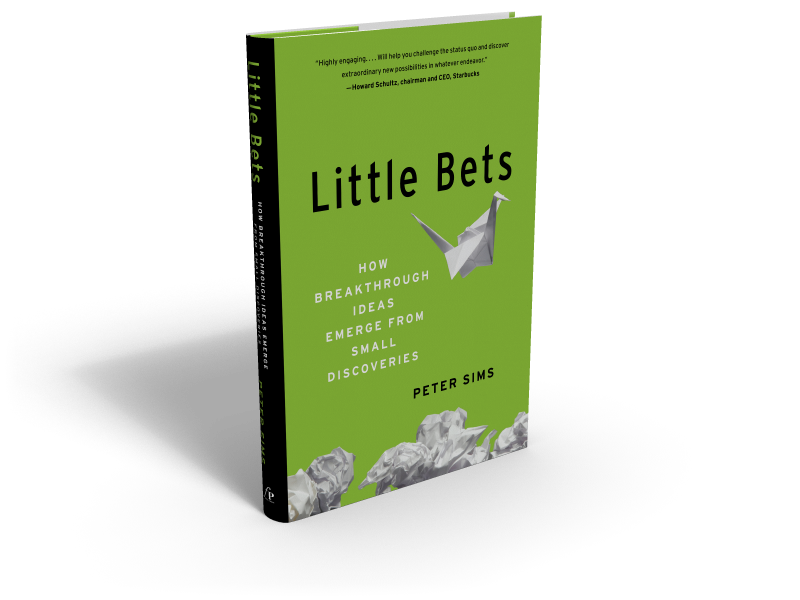
I just finished Little Bets, by Peter Sims. This book explores the similarities between a variety of creative processes. Sims examines stand-up comedy, pixar’s story boarding process, the agile software development process, and all kinds of other scenarios.

27383-little-bets-3d-left1One thing that these processes all have in common, Sims argues, is failing forward. The key is iterative development. When developing new products at Proctor and Gamble, for example, designers will begin with rough sketches and low-quality prototypes. Once they get feedback from actual users, they can take that information and slightly improve their designs. Doing this repeatedly allows them to learn as they go, rather than designing a new product from the top down and then testing the market response. Continue reading →

Week 37: One Hundred Years of Solitude

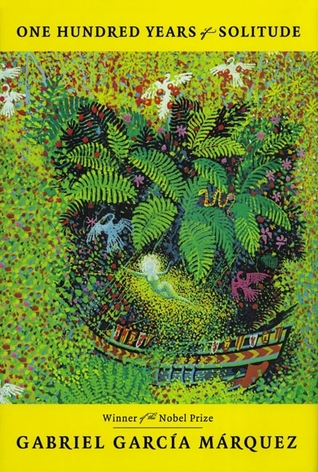
For the past couple weeks, I’ve been reading Gabriel Garcia Marquez’s One Hundred Years of Solitude. I started it on the ohyosrecommendation of a coworker, not realizing what kind of book it was. It’s been a slow few weeks, but I finally finished it, and it was pretty good.

So One Hundred Years of Solitude is literary. Like, really literary. It won the Nobel Prize in Literature. Not knowing this going in, I was kind of surprised, but it was a pleasant surprise and I think all-told I liked the book. OHYoS tells the story of the fictional Mexican town of Macondo and of the Buendia family that founded it and lived in it until the end. Continue reading →

Week 33: Zealot: The Life and Times of Jesus of Nazareth

A couple weeks ago, this video of author Reza Aslan made the rounds on the interwebs. It’s pretty ridiculous, and it inspired me to buy his book Zealot. I don’t know a lot about biblical history, so I was excited to read Aslan’s book and get a historical outlook on Jesus.reza-aslan-cropped-proto-custom_24

Aslan divides this book into three parts. The first section is an overview of ancient Judea for about a century before and after Jesus’s birth. This was great because it provided a lot of background on the political and social climate that existed at that time. The second section covers Jesus’ life and ministry. The third covers the history of the early church for about a century after Jesus’ death.

Continue reading →

Week 32: The Action Hero’s Handbook

David Borgenicht’s Action Hero’s Handbook is a good novelty book, but it has some good information and it is an enjoyable read. In the first chapter you learn how to clear a room, secure a crime scene, handle a hostage negotiation, and kill a great white shark. I don’t care who you are, you gotta love a first chapter like that.

Handbook is full of short, fun how-tos for all kinds of improbable situations. It’s not a textbook, but it’s useful to get oriented in case you ever need to keep a bus going at over 50 miles per hour. The only complaint I have about it is that it’s a little short. It doesn’t help that two of the chapters, “love skills” and “paranormal skills” are filled with nothing but platitudes and pointless knowledge, so those are essentially wasted pages.

It only takes a couple days to read Handbook, and it’s a lot of fun to learn all of these skills, so if you’re looking for something to kill time with or a gift for a non-reader, give this one a shot, it’s worth it.


See the full list of books that I’ve read for this project here.

Week 31: One Way Forward

One Way Forward: The Outsider’s Guide to Fixing the Republic is a book you have to read. It isn’t that long. More of a pamphlet, really. When I think of Lawrence Lessig, I still think of him as a copywrite/EFF guy, but he’s established himself as a top notch political thinker. In One Way Forward, he presents a well crafted case that money is at the core of the US government’s problems. He posits that in this era of connectivity, we are uniquely positioned to bring about a radical change in our government.

Continue reading →

Week 29: Mr. Penumbra’s 24-Hour Bookstore

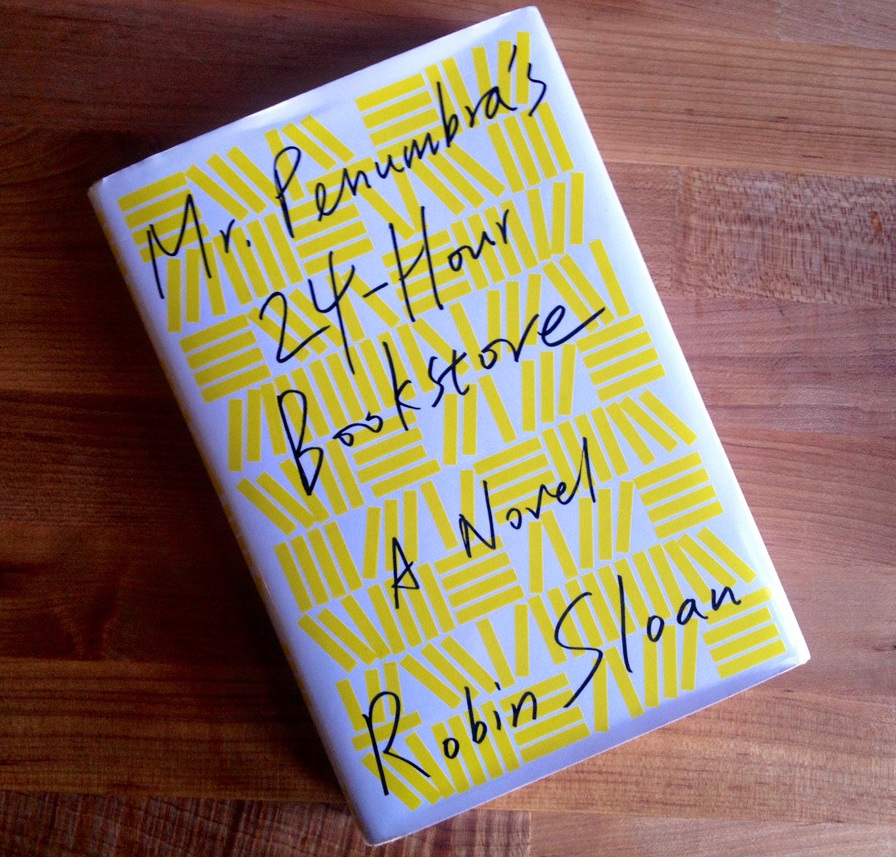
Mr.-Penumbras-24-Hour-BookstoreI had never heard of Mr. Penumbra’s 24-Hour Bookstore until my roommate recommended it to me, and I’d never heard of its author, Robin Sloan. But I decided to give it a shot, and I have to say: This book is awesome!

Written at the crossroads of centuries-old secret orders and cutting edge web services, Penumbra’s is funny, exciting, gripping, and totally off-the-wall. It follows the story of Clay Jannon after he’s laid off by a San Francisco startup. He finds a new job working at a strange, old bookstore for the equally strange and old Mr. Penumbra. Soon he gets wrapped up in the store’s mysteries, using data visualization to solve a secret puzzle and Amazon’s Mechanical Turk to crack a centuries-old encrypted book. Continue reading →

Week 26: Heart of Darkness and Halfway Reflection

I just finished Heart of Darkness by Joseph Conrad, and it blew me away. This has been my favorite book since high school. I read it several times, but I haven’t read it in a couple years. This reading reminded me why it’s my favorite book and, if possible, made me like it more.

I’m not going to talk a lot about it, it’s pretty short so if you haven’t read it, definitely give it a shot. Like other Conrad novels, it starts slowly, but pay attention because the closer you read, the harder the final 15 pages hit. Incredible.

Continue reading →

Week 25: The Black Swan

No, not the movie/ballet. The NYT bestselling nonfiction (because “philosophy” sounds too scary) book by Nassim Nicholas Taleb. I’ve heard a lot about this book, and I’ve heard it’s very good. It’s definitely challenging.

After reading Outliers, I was a little disappointed. I wanted something more in-depth and controversial. The Black Swan is definitely that. The central theme of the book is summed up in its subtitle, “The Impact of the Highly Improbable.” Broadly, Taleb thinks that humans as a whole are poorly adapted to live in an environment where a single event can change the world. These are “black swans” (a couple of black swans that Taleb, or “NNT,” as he calls himself, uses as examples are the terrorist attacks of September 11th 2001 and the “black Monday” stock market crash of October 19th 1987). Because we don’t appreciate the impact of these events, Taleb argues, not only are we driving a car while blindfolded, but we’ve deluded ourselves into thinking that we can see the road.

Continue reading →

Week 23: Rhyme’s Reason

This week I read Rhyme’s Reason: A Guide to English Verse. I would call it a poetry textbook, but handbook is more appropriate. It’s short, but it’s very challenging. John Hollander wrote each example in the form of the poem he was describing. So, an Elizabethan sonnet about about sonnets, and an Italian sonnet about how Italian sonnets differ from the Elizabethan ones.

I’ve never been a big fan of poetry. I’ve never read much, I’ve written less, and I’ve never really enjoyed it. But Rhyme’s Reason gave me a better understanding of how to read poetry in 3 days than years of formal English classes. It’s only 70 pages long (plus an ample appendix), but because it’s almost entirely written in verse, you spend a lot of time on those pages.

Continue reading →